

Never Bin a Battery
In June 23-24th I attended the ReGen Expo Australia in Sydney. This was a fantastic industry event that combined the AWRE and Circularity events for the first time. During this event, I attended a session with Suzanne Toumbourou, Brett Lemin, Zoltan Sekula, and Satiesh Muniandy where they discussed ‘Batteries & E-Waste: Addressing Risks and Embracing Solutions for a Sustainable Future’. In 2018-19 I delivered work for CSIRO on the opportunity for lithium battery recycling for Australia working with the amazing Dr Naomi Boxall. Our work launched additional research into this area by CSIRO. I was interested to hear about the current industry challenges given industry and government have been working on this challenge/opportunity for some time and lithium batteries are increasingly common in consumer products.
It was a fabulous session that presented data collected from industry regarding the impact of fire on our waste sector and infrastructure. If you want to learn more, you can find a 2023 ACOR report here. Also a summery report from 2024 that was prepared by ACOR and WCRA here that were discussed by Brett at this session.
Some of the summary statistics mentioned at this session, I posted in my recent Linked in post. The highlights from the session for me are below.
Lithium battery thermal runaway is a safety, environment, infrastructure and community risk. The impacts on the waste and recycling sector are significant.
There are around:
- 12,000 fires per yr
- average of 30/ day
- 11% reported
- 38% no flames (toxic gas release)
Fires are a major business cost. And while the average figures below are high, the total loss or removal of a truck from the roads has an additional, follow on impact. There will be delays to getting that truck operational again or, in the case of write-off, importing a replacement truck which results in months of delay and impacts to recycling collection services.
The estimated financial costs of battery fires are:
- 💲 174,000 average cost per truck
- 💲417,000 average cost per organisation per year
My key takeaways from the session were:
✊ we need to mandate battery product stewardship
🇦🇺 we need a national approach to harmonise regulations between jurisdications
‼️this is an urgent issue!! Particularly for products with embedded batteries e.g. shoes, vapes etc
♻️ Australia already has recycling options, such as EcoBatt (ANZ) and Envirostream Australia Pty Ltd
🔋82% batteries go to landfill 😱 or conversely, 18% are recovered.
The overwhelming message is that batteries, all types, do not belong in waste bins. Australia needs a greater focus on consumer education, to divert them from damaging our waste and recycling infrastructure, causing harm to the people that work in this sector and when mis-managed, harm to our environment. A mandatory product steward scheme would help. Solutions for products such as vapes are needed as vapes are not able to be recycled unless the batter can be removed.
For households, there are collection bins at local supermarkets e.g. Aldi, and other retailers that have bins to safely recover these resources. For businesses, check out B-Cycle, Australia’s battery recycling scheme. And finally - Never bin a battery!
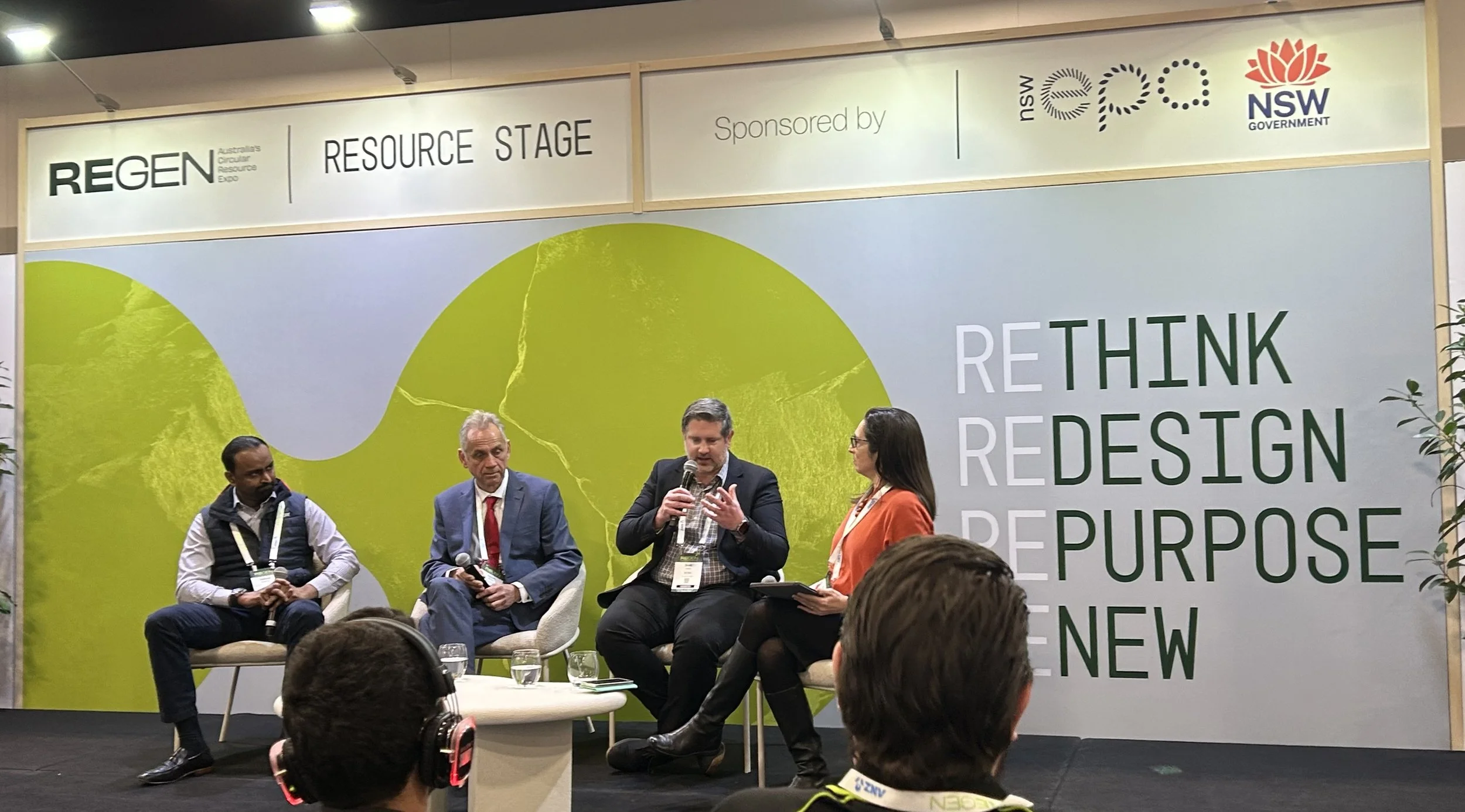
L-R: Satish, Zoltan, Brett and Suzanne presenting at ReGen 2025
