
World Environment Day, David Suzuki & Hope.
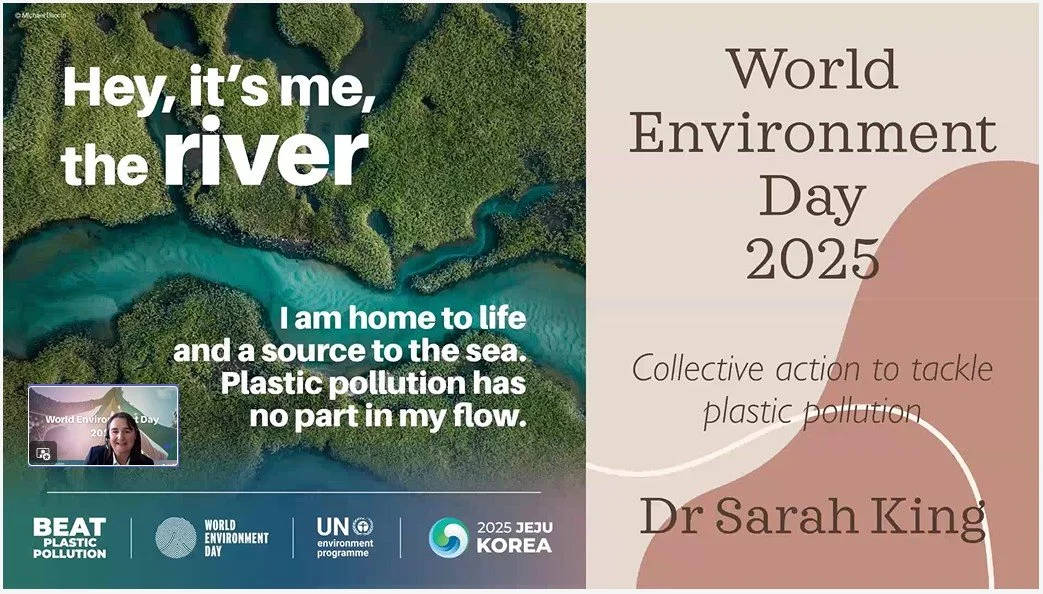
Back in June I delivered a presentation to the Bureau of Meteorology for World Environment Day. The focus for this year, 2025, is Beat Plastic Pollution. According to the WWF, Australians consume (use, not eat) around 147kg of plastic per person, each year. Globally, plastics contribute 3.5% of GHG emissions. Plastics are now found in our highest mountains and our deepest oceans. And I was a bit shocked to read recent research from the University of Queensland that showed plastic products release microplastics in our dishwashers (!).
Plastics have become ubiquitous in our lives because the material is so useful and adaptable. We ran a poll during the presentation and most people recognised that plastics are in packaging, sometimes incorrectly disposed of, but not many people realised that plastics are incredibly useful in our health sector. We do need some plastic products.
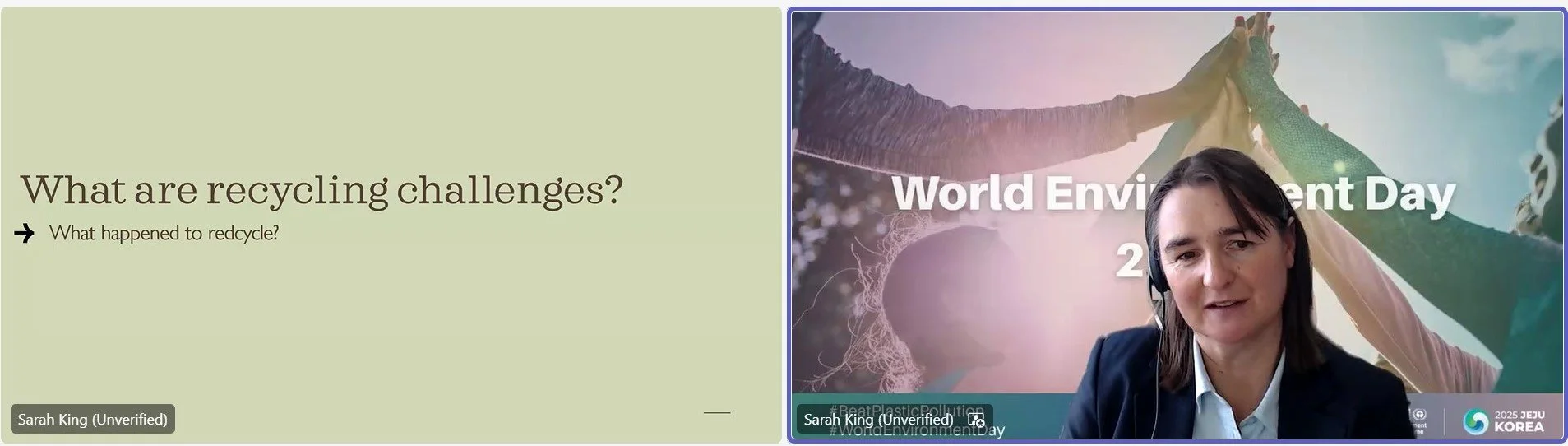
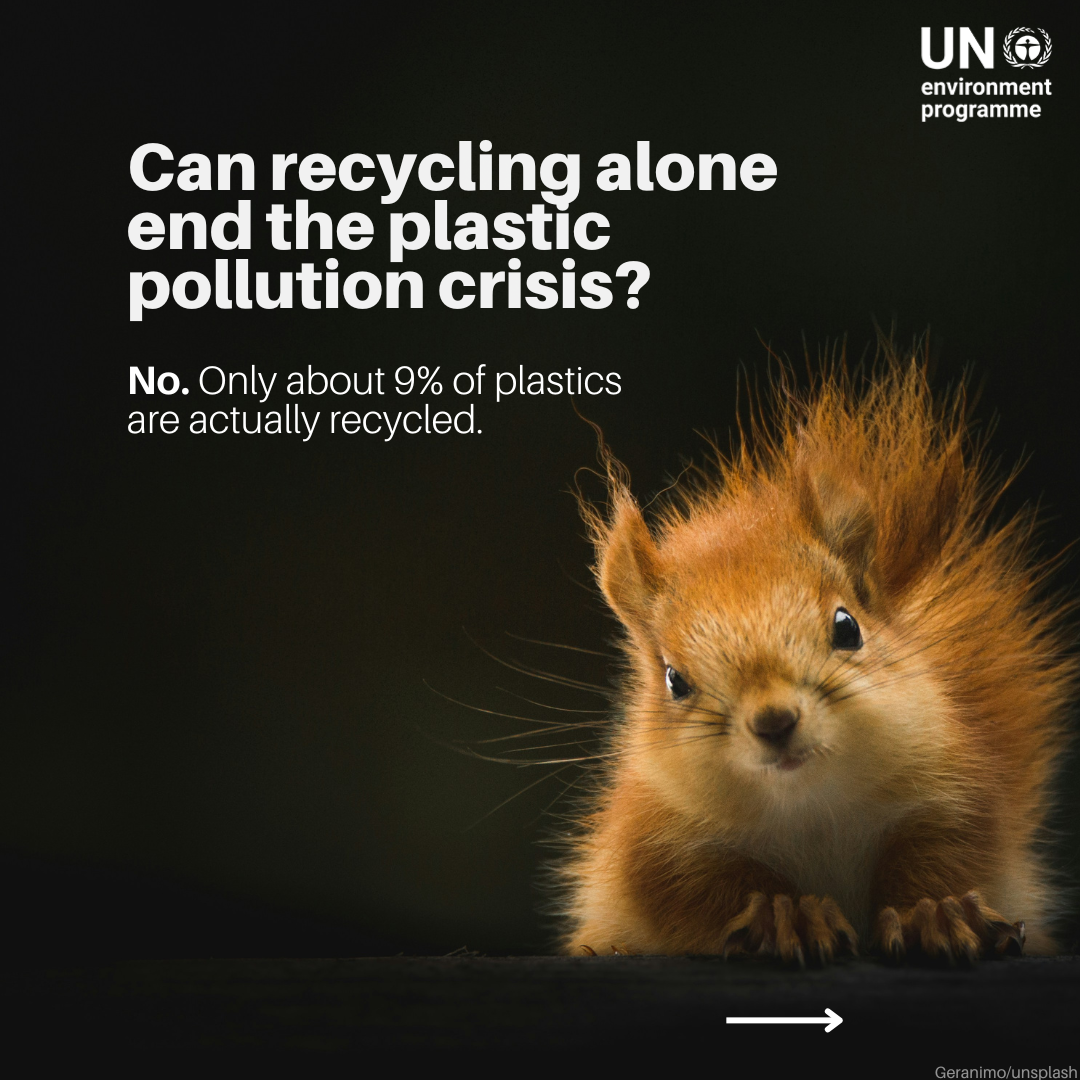
My presentation also discussed what happened with Redcycle – Australia’s soft plastics collection scheme. Broadly, the collapse was an example of a lack of market demand for the material and we know that offtake markets are critical for recycled materials. While recycling is useful, it alone is not the answer. Australia only recycles around 12% (it’s actually 12.6% based on recent reports).
Global estimates are that only 21% of plastics today is economically recyclable. Recycling alone will not solve this problem, but it remains an important strategy and it’s fantastic that in Australia, new infrastructure is coming online with an 87% increase in capacity forecast over the next 5 years.
The key message from World Environment Day was that plastic pollution is a complex problem and multiple intervention strategies are necessary. This includes increased recycling, but also improved design, eliminating unnecessary plastic, designing products for extended use – all of the strategies that are part of a circular economy. Attendees at the presentation were fantastic in providing their ideas for how to beat plastic pollution. We discussed reuse options, sustainable procurement, Plastic Free July (it was approaching at time of presentation), education, collecting litter and recycling.
Last but not least, we could do to use less plastics. And not just plastics but we need to consume less. Population growth and consumption are key challenges for our environment.
World Environment Day was closely followed by Earth overshoot day which this year, was 24 July.
This is the date when the Earth’s capacity to regenerate what we have consumed, is reached for the year. From this date onwards, we are borrowing from our future to pay for our today. In stark news, we may have passed a 7th planetary boundary – ocean acidification. South Australia is bearing the brunt of climate change on our oceans with a devastating algal bloom.
Recently, the great environmentalist David Suzuki made headlines by announcing humanity’s fight against climate change has been lost. It’s time to “hunker down”. Wow, talk about a ‘mic drop’ moment from an environmental activist icon.
Working in the circular economy, it’s important to remain hopeful. So, I loved the open letter by Donald Wright to David Suzuki. It was a request to remain hopeful, and if you ever need a dose of environmental hope, then check out Jane Goodall and Douglas Abrams ‘The Book of Hope’.
I am grateful to work with clients for positive change in our economy, environment and society with the implementation of new technologies, recycling and circular economy projects. Also to do what I can individually by using less plastics, picking up rubbish when I can, and importantly – to remain hopeful!